A personal dedication to the former community of first generation Lithuanians that settled in Eccles and Patricroft in the late 1940s and 1950s.
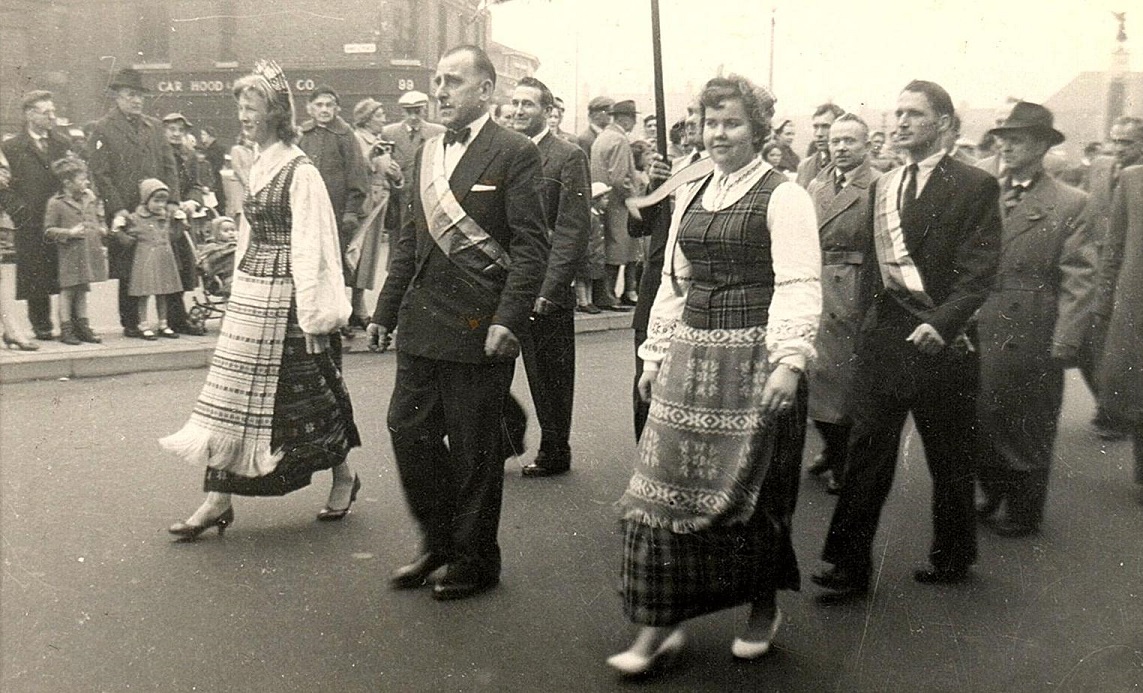
Mr. Vladas Kupstys (1912-1982) leading members of Eccles and Patricroft Lithuanian Community at the Remembrance Sunday Commemorations in 1959.
An introduction into the story of the community:
In the early months of WW2 a non aggression pact, commonly known as the Molotov-Ribbontrop Pact, was signed between Nazi Germany and the Soviet Union. Essentially, this also included a secret agreement that divided sections of eastern europe between the two powers, as part of this, the independant countries of the Baltic States, would become under the Soviet Union's sphere of influence, this occured in June 1940 with the invasion and forcible annextion of these three small Baltic countries. During this intial annexation thousands of ordinary Balts were arrested, killed or sent to labour camps in Siberia.
The so called pact was to be short lived, because on the 22 June 1941, Nazi Germany launched their ill fated invasion of the Soviet Union and several years of attrocites and hardship had further to be endured by the citizens of the Baltic States.
Four years later, following the end of WW2, the once independent nations of the Baltic States (Lithuania, Latvia and Estonia) found themselves again under Russian occupation and had once again been forcefully annexed into the Soviet Union. This followed on from the elections that were held on July 14–15, 1940. These parliamentary elections in Estonia, Latvia, and Lithuania were orchestrated under military occupation and NKVD supervision following Soviet ultimatums. Voters were only permitted to select pre-approved, pro-Soviet candidates. The blatantly rigged polls resulted in Soviet-controlled parliaments that immediately petitioned for incorporation into the USSR.
In the Summer of 1945 thousands of Lithuanian citizens and those of the other Baltic states, that had already been displaced during the war, found themselves living in D.P. (Displaced Person) Camps run by the United Nations Relief and Rehabilitation Administration (UNRRA) which were mainly located in Western Germany.
With little hope of returning to their homeland, they had no alternative but to make a new life for themselves in Western Europe, Australia and the American continent.
The vast majority that came to Britain, were part of "Operation Westward Ho" and "Balt Cygnet" These schemes by the British Government were initiated to fill the shortage of workers within the United Kingdom and help put the country back on its feet in this time of austerity.
Of course, in this particular time period there were ample employment opportunities in the Eccles and Patricroft area, with engineering firms such as L.Gardner and Sons, Mitchell and Shackleton, W. H. Bailey as well as the Royal Ordnance Factory, also other manufacuring companys like Ward and Goldstone and several weaving and cotton mills, such as Elkanah Armitage,Cawdor Street, Patricroft,which by late 1948 had 30 Lithuanians within its workforce. Also, just across the Manchester Ship Canal we had of course, the Trafford Park industrial estate, with all its numerous industries.
As far as the religious and spiritual needs of the community was concerned, in 1953 they even had their own Lithuanian priest, Father Valentinas Kamaitis, who for a short period of time resided at the St. Joseph's Home Presbytery, Worsley Road, Patricroft. He later took on the major role as a priest at St. Chads Church, Cheetham Hill, and in later years, because of his service and work within the church was appointed a Canon. Father Kamaitis was always a well respected individual, whose work and dedication made him the corner stone of Manchester's Lithuanian community. He died in 2014 and his buried amongst many of his fellow Lithuanians at Moston Cemetery, Manchester.
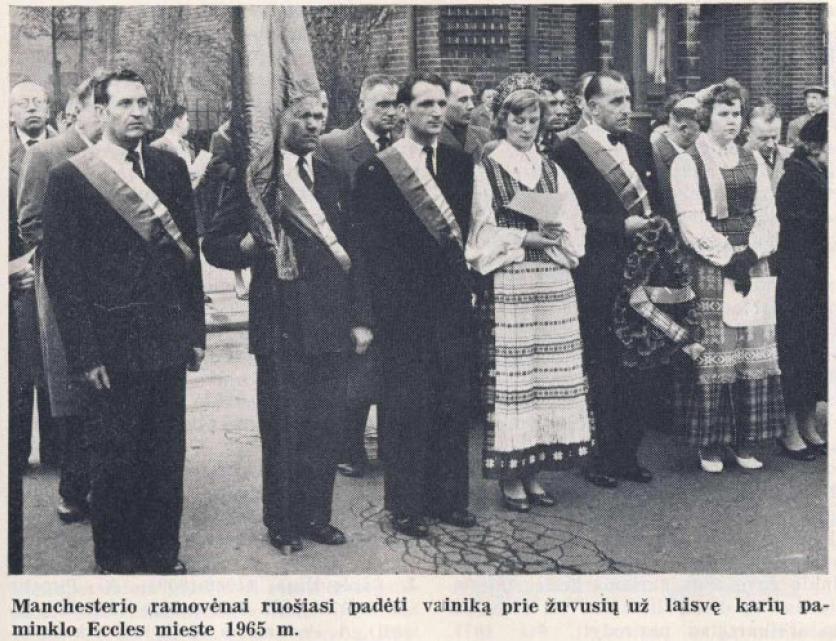
Members of the Eccles and Patricroft Lithuanian Community preparing to lay a wreath at Eccles Cenotaph on Remembrance Sunday 1965
Front Row (Left to Right) Kazys Murauskas, Antanas Jakimavicius, Kostas Pazera, Vera Pazera, Vladas Kupstys, Bernedetta Navickas-Snabaitis.
Second Row (Left To Right) Antanas Sliaturis, Albinas Pupelis, Albertas Vigelskas.
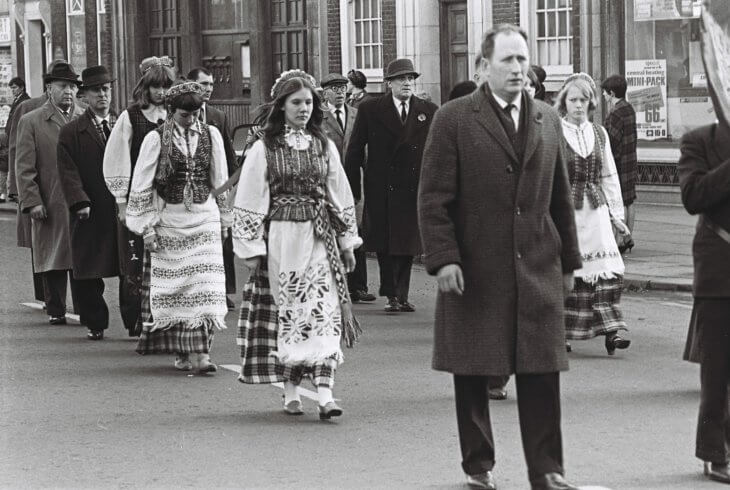
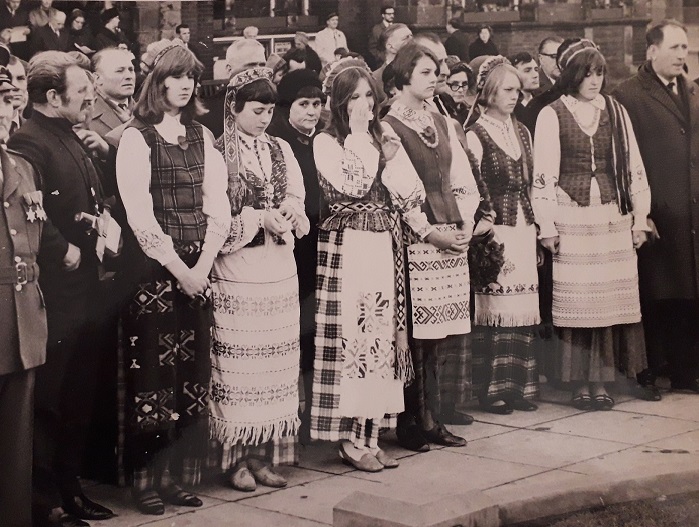
Below images of the Remembrance Sunday Commemorations 1968
Photographer Mr. George Shepherd
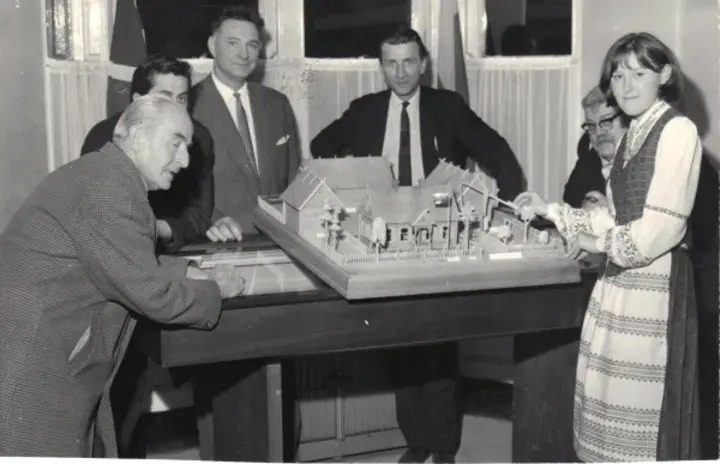
As part of a Lithuanian exhibition held at Monks Hall Museum in 1967, here we see Mr. Kazimieras Steponavicius in the dark suit standing behind his constructed model of a Lithuanian farmhouse.
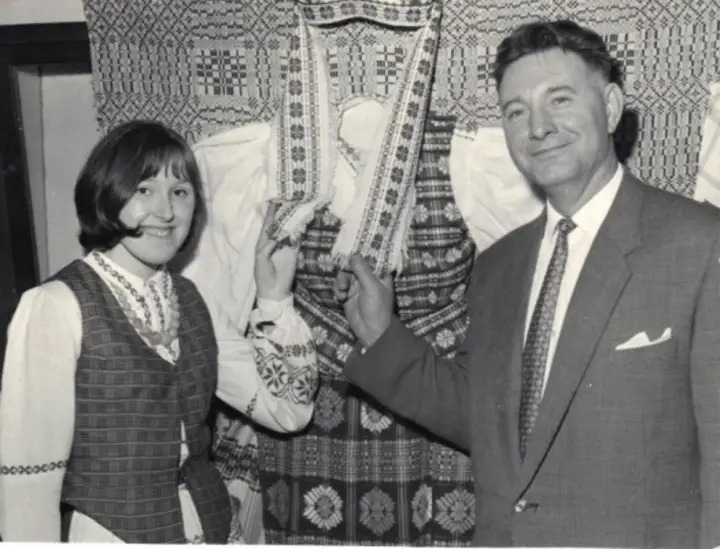
Another photo from the same exhibition displaying typical fabric designs used in Lithuanian National Dress.
This Web Page was Built with PageBreeze Free HTML Editor